

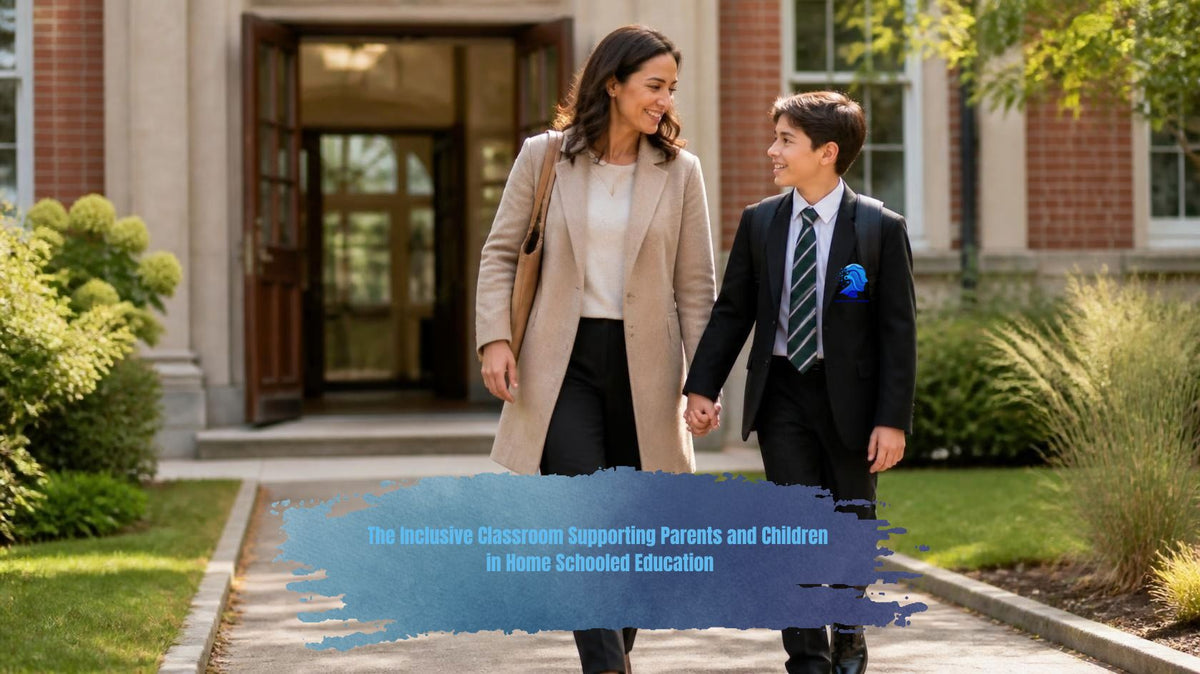
A Practical Guide For Parents Starting Their Home Education Journey
Making the decision to home educate your child is rarely a quick decision.
In fact, for many parents it feels more like the end of a long journey than the beginning of one.
You've probably spent months, maybe years, trying different approaches.
Meetings.
Support plans.
Attendance discussions.
School phone calls.
SEND reviews.
Perhaps you've sat through countless conversations wondering whether things will improve.
Eventually you've reached a decision.
You believe home education may be the right pathway for your child.
So what happens next?
The first thing to understand is this:
You do not need to recreate school at home.
Many parents immediately panic.
"How am I going to teach Maths?"
"What if I'm not good at English?"
"What if I get it wrong?"
The good news is that home education in 2026 looks very different to how it looked twenty years ago.
There are more resources, support networks, learning platforms and communities available than ever before.
The challenge is often not finding resources.
The challenge is knowing where to start.
Remember - You Know Your Child Better Than Anybody
One of the biggest advantages you now have is something no school, teacher or educational provider can ever fully replicate.
You know your child.
You know:
- What interests them.
- What motivates them.
- What frustrates them.
- What causes anxiety.
- What they avoid.
- What they excel at.
You know their comfort zone.
You also know what lies just outside their comfort zone.
And whilst comfort zones feel safe, growth almost always happens just beyond them.
The beauty of home education is that you can adjust how learning is delivered whilst still encouraging your child to challenge themselves.
For some children that may mean shorter lessons.
For others it may mean more movement breaks.
Some learners thrive with visual timetables.
Others prefer flexibility.
Some need structure every day.
Others become overwhelmed by rigid schedules.
Home education allows education to adapt to the child rather than expecting the child to adapt to the system.
Step One: Speak To Your School
If you have made the decision to home educate, your first step is normally to inform the school that you wish to withdraw your child.
Most schools will explain the process and provide guidance around next steps.
If your child has an EHCP, the process can be slightly different and there may be additional discussions with your Local Authority before arrangements are confirmed.
This can feel overwhelming initially.
Take your time.
Ask questions.
Keep records.
Most importantly, don't be afraid to seek advice.
Before Leaving, Gather Everything You Can
One of the best pieces of advice we can offer is simple:
Collect everything.
Before your child leaves school, try to gather:
- School reports.
- Certificates.
- Previous assessments.
- Art work.
- Design Technology projects.
- Computer-based projects.
- Photographs of practical work.
- Awards and achievements.
- Evidence of qualifications already completed.
Many parents overlook this.
However, these documents help build a picture of achievement and progress.
They can also prove useful later when discussing future education pathways, qualifications, college courses or apprenticeships.
Think of it as creating your child's educational portfolio.
Home Education Doesn't Have To Look Like School
One of the biggest mistakes parents make is trying to recreate a traditional classroom at their kitchen table.
Home education allows opportunities that schools simply cannot always provide.
A walk in the countryside suddenly becomes:
- Geography
- Environmental studies
- Exercise
- Photography
- Observation skills
A trip to a museum becomes history.
Cooking becomes maths.
Shopping becomes budgeting.
Travelling becomes planning and problem solving.
The world becomes the classroom.
That doesn't mean academic learning disappears.
Far from it.
It means learning can become broader, more engaging and often more relevant.
Resources Are Everywhere
Many parents are amazed at the volume of free and low-cost educational resources available.
Popular learning resources include:
- White Rose Maths
- Twinkl
- BBC Bitesize
- Oak National Academy
- National Geographic resources
- Educational YouTube channels
- Online learning platforms
There are thousands of activities, lesson ideas and downloadable resources available.
If you're looking for Science activities, simply searching online for kitchen science experiments can provide hours of learning.
From creating mini volcanoes to investigating chemical reactions, there are countless opportunities to bring learning to life.
Children often remember these experiences far longer than they remember worksheets.
Finding Other Home Educating Families
One of the first things many parents do is join home education groups.
There are national groups.
Local groups.
Social media communities.
Meet-up networks.
Learning cooperatives.
Many families organise:
- Educational visits.
- Activity days.
- Park meet-ups.
- Shared teaching sessions.
- Sports groups.
- Social events.
These can be fantastic opportunities.
However, it is also important to think carefully about safeguarding.
As with any group involving children, parents should take reasonable steps to ensure they feel comfortable with the people and arrangements involved.
Many families find trusted recommendations from friends, existing home education families or local networks particularly valuable when choosing activities.
Don't Forget Maths And English
Whilst home education offers enormous flexibility, there are still some core areas that deserve attention.
English and Maths remain incredibly important.
Not because every child needs GCSEs.
But because these subjects unlock future opportunities.
One pathway that is becoming increasingly popular is Functional Skills.
Functional Skills qualifications focus on practical real-world skills and are available across different levels before progressing to Level 2.
Many educational professionals view Functional Skills as an excellent progression route because:
- Progress can be measured clearly.
- Learners experience success more regularly.
- Confidence grows through achievable milestones.
- Skills have direct relevance to everyday life.
Once achieved, families and learners can then make informed decisions about future qualifications and vocational pathways.
The key message is simple:
Education should prepare young people for life, not simply examinations.
Routine Still Matters
Many children come into home education because school routines were no longer working.
That doesn't mean routine becomes unimportant.
In fact, for some learners routine becomes even more important.
The difference is that you can design the routine around your child.
Ask yourself:
- How long can they concentrate for?
- Are mornings or afternoons better?
- Do they need movement breaks?
- Are visual reminders helpful?
- Do they need predictable structures?
If your child has dyslexia, preparation matters.
If your child has ADHD, movement matters.
If your child has autism, routine may be crucial.
You don't need to force a child into a system that isn't working.
You can create a system that works for them.
What Happens If Something Isn't Working?
This is another major advantage of home education.
You can adapt quickly.
If a lesson isn't working:
- Take a break.
- Change the activity.
- Try a practical approach.
- Revisit it later.
- Explore a different teaching method.
Remember:
The way you were taught may not be the way your child learns best.
Education is not about delivering information.
It's about helping a child understand it.
Don't Lose Sight Of The Future
Whilst it is important to focus on today, it's also important to think about tomorrow.
How old is your child?
What do they want to do after Year 11?
Do they have a career in mind?
Would they like to:
- Go to college?
- Start an apprenticeship?
- Learn a trade?
- Follow a vocational route?
- Progress to higher education?
The earlier you begin considering these questions, the easier planning becomes.
Many post-16 pathways require English and Maths qualifications.
This is why maintaining progress within these areas is so important.
Home education should never be viewed as stepping away from future opportunities.
It should be viewed as finding a different path towards them.
The Goal Isn't To Replicate School
Many parents start home education believing they need to become teachers.
You don't.
Your role is not necessarily to deliver every lesson.
Your role is to ensure your child receives a suitable education, experiences opportunities to learn, and develops the skills they need for adult life.
Some parents teach directly.
Some use online platforms.
Some use tutors.
Some join home education groups.
Most use a combination of approaches.
There is no single right way.
Final Thoughts
The decision to home educate is often one of the biggest decisions a family will make.
It can feel exciting.
It can feel terrifying.
Sometimes it feels like both at the same time.
The good news is that thousands of families have successfully travelled this road before.
Take your time.
Build routines.
Stay flexible.
Focus on progress rather than perfection.
Most importantly, remember why you made the decision in the first place.
Not because education didn't matter.
Because it mattered so much.
Because you wanted an educational pathway that allowed your child not just to learn, but to thrive.


